

As spring turns to summer in Central Texas, wasp and hornet activity ramps up significantly.
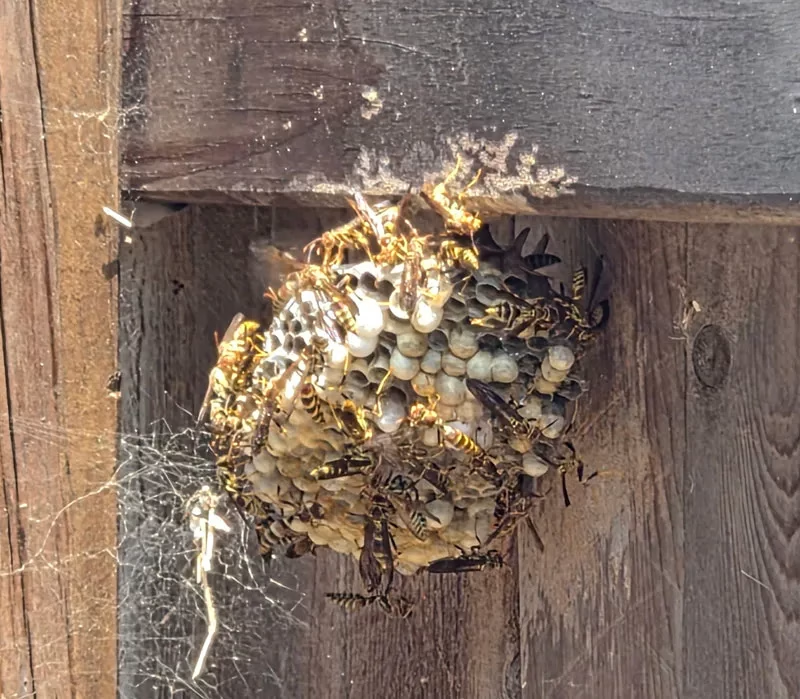
These stinging insects can be found building nests under eaves, in attics, in wall voids, in the ground, and in trees around your home. They are also often on fences like in the picture we took below.
While wasps and hornets do serve a beneficial role in the ecosystem as predators of other insects, nests near your home present a real safety hazard, especially for individuals with phobias or venom allergies.
Knowing which species you’re dealing with and when to call in a professional is essential for safe, effective nest removal.
Common stinging insects in Texas
Paper Wasps
Paper wasps are perhaps the most common stinging insect Texans encounter around their homes.
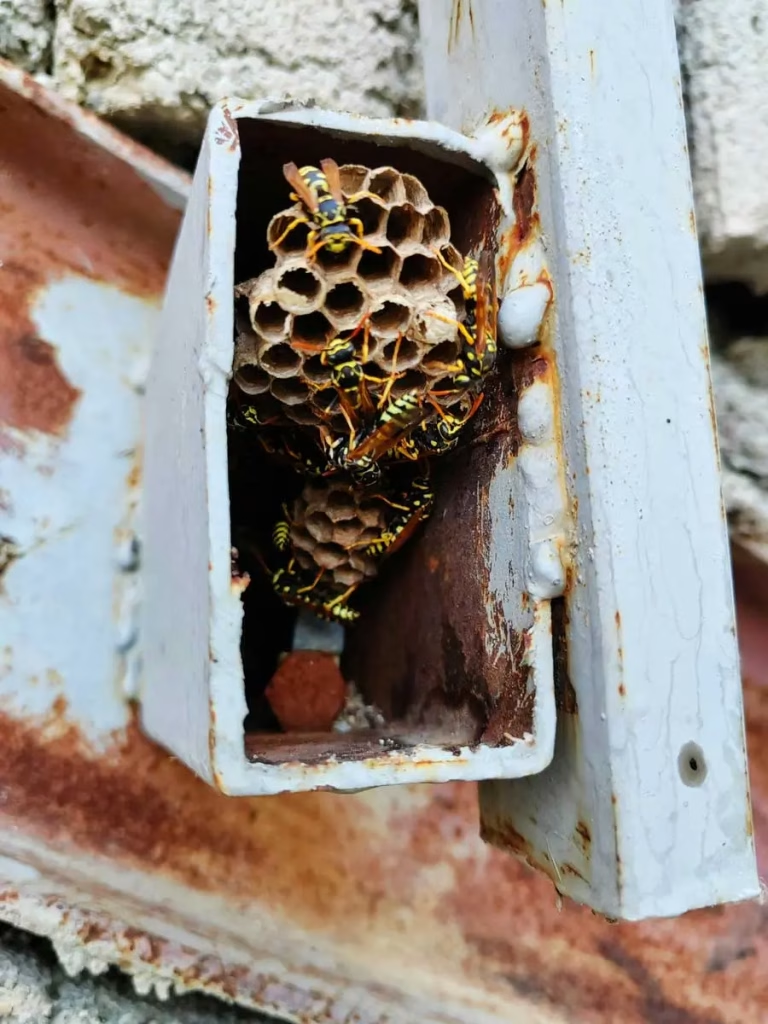
They build the characteristic open, umbrella-shaped nests made of gray paper-like material, often under eaves, on porch ceilings, beneath deck railings, and inside BBQ grills that haven’t been used in a while.
Paper wasps are generally not aggressive unless their nest is threatened, but their stings are painful and can cause severe reactions in allergic individuals.
Yellow Jackets
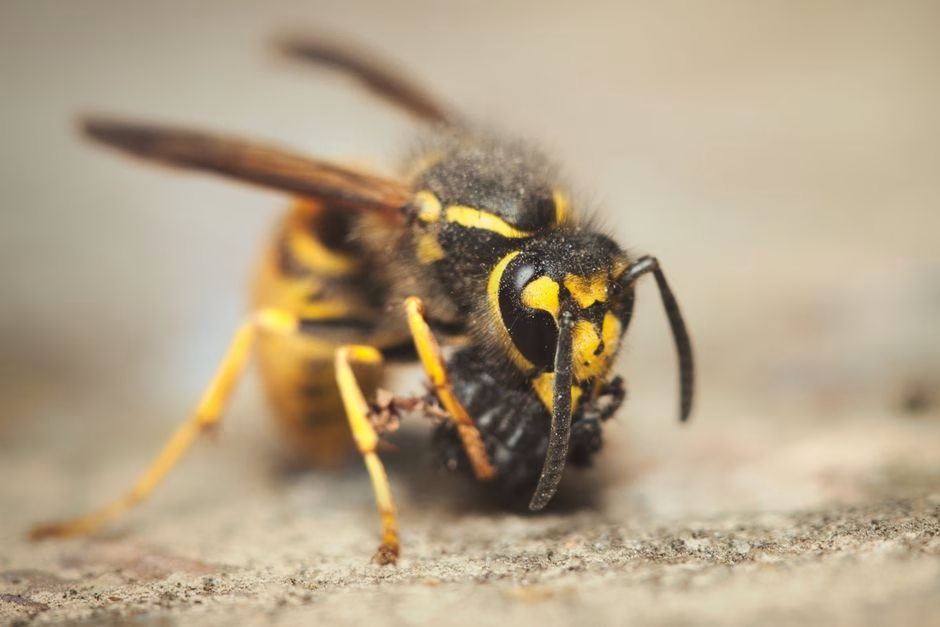
Yellow jackets are among the most aggressive stinging insects in Texas.
They build enclosed, papery nests, often underground in old rodent burrows, or in wall voids, attics, and decks.
Yellow jackets are highly protective of their nests and will sting repeatedly without provocation when they feel threatened.
Their colonies can contain thousands of individuals by late summer and early fall, when populations peak.
Accidentally stepping on a ground nest or disturbing one with a lawn mower is a common cause of dangerous mass-stinging events.
Bald-Faced Hornets
Bald-faced hornets build large, football-shaped enclosed paper nests, typically high in trees, under eaves, or on utility poles.
They are black and white in coloration and are extremely defensive of their nests, they will aggressively attack and chase intruders.
Their stings are considered more painful than most wasp stings, and colonies can contain several hundred workers by summer’s end.
Mud Daubers
Mud daubers are solitary wasps that build the distinctive mud tube nests you might notice on walls, under eaves, and inside garages.
Unlike social wasps and hornets, mud daubers are not aggressive and rarely sting.
Their nests can usually be scraped off without risk, though an abundance of them can indicate other pest activity since they provision their nests with spiders.
When Are Wasps and Hornets Most Active?
In Texas, wasp and hornet colonies build up throughout spring and reach maximum size in late summer and early fall, which is also when they become most defensive and aggressive.
New queens overwinter and begin building new nests each spring.
Treating nests in early spring when colonies are still small is generally much easier and safer than dealing with a fully established late-summer colony.
DIY vs. Professional Nest Removal
Small, accessible paper wasp nests can sometimes be treated with aerosol wasp and hornet spray at night when wasps are less active.
Wear protective clothing, approach quietly, apply the spray, and retreat quickly.
However, yellow jacket nests (especially in walls or underground), large bald-faced hornet nests, and any nest near an individual with a known venom allergy should always be handled by a professional.
Attempting to treat these nests improperly can result in a dangerous mass-stinging event.
What Attracts Wasps to Your Home?
Wasps are attracted to protein sources early in the season (they’re hunting insects to feed their larvae) and sweet foods later in summer.
Outdoor dining, sweet beverages left uncovered, and overripe or fallen fruit can all attract wasps.
Keep trash cans sealed, clean up food and drink spills promptly, and keep outdoor dining areas tidy.
Inspect your home’s eaves, roof overhangs, and other sheltered areas each spring and treat nests before they become large.
Safe, Professional Stinging Insect Control
Paladin Pest Control provides safe, effective wasp, hornet, and yellow jacket nest removal throughout Central Texas.
Our technicians are trained to identify nesting species, locate hidden nests in wall voids and attics, and treat them using the appropriate methods for complete elimination.
Don’t risk a dangerous encounter, call Paladin Pest Control for professional stinging insect removal.