

When most people think about tick bites, they picture hiking through cedar brush on a trail at Pedernales Falls or wading through tall grass on a hunting lease. And while those are real risk situations, they are not where most tick bites in Central Texas actually happen.
According to the CDC, many people get ticks in their own yard or neighborhood. Not on a trail. Not in the wilderness. In the backyard, while the kids are playing, the dog is running around, or you are pulling weeds near the fence line.
If you live in San Marcos, Buda, Kyle, or anywhere in the Texas Hill Country, here is what you need to know about the ticks that are likely already living in your yard, and what they can do to your family.
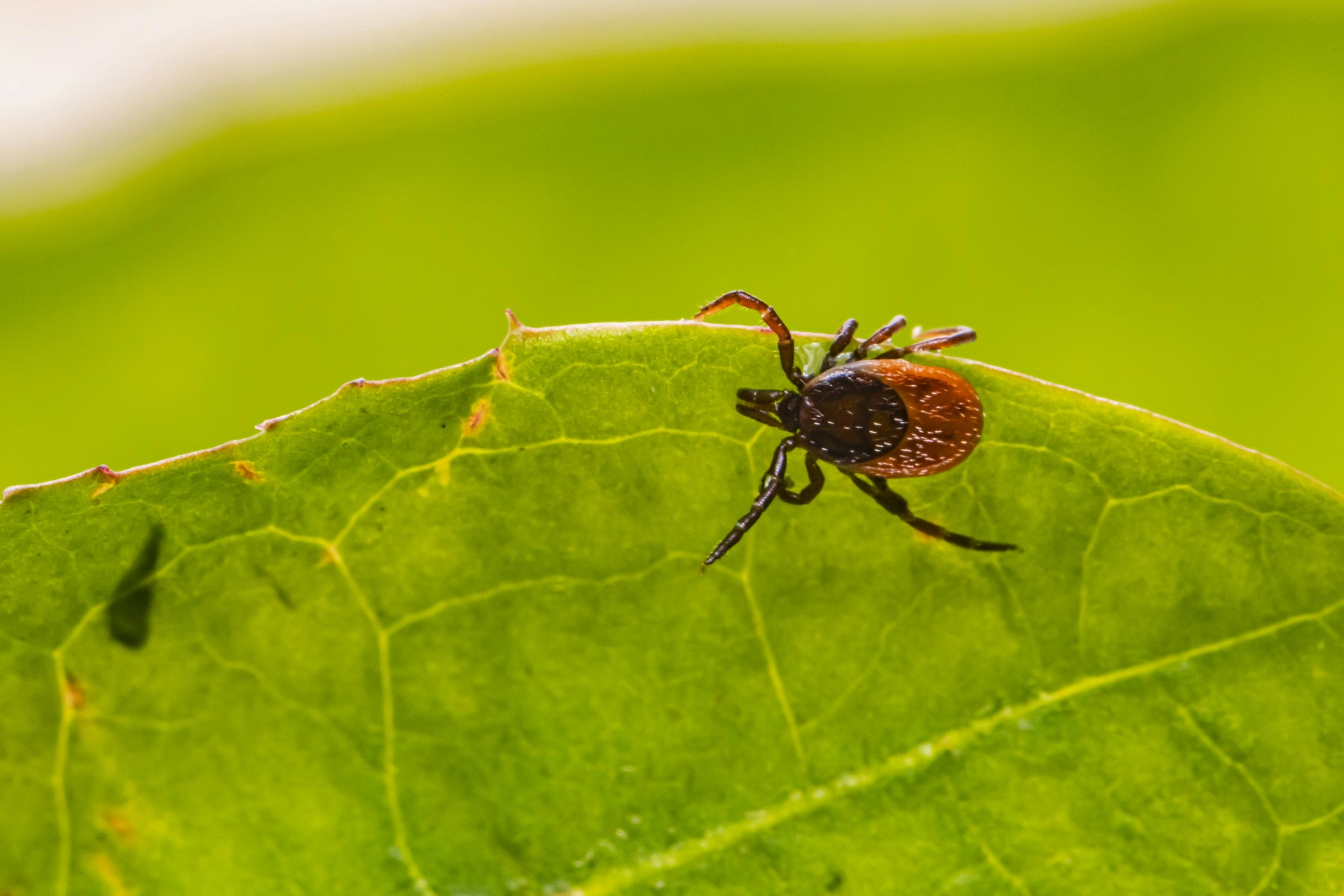
The Lone Star Tick: Central Texas’s Most Aggressive Pest
Texas Hill Country has several tick species, but the one that affects most residents is the Lone Star tick. It gets its name from the single white spot on the female’s back, and it is found in dense concentrations across Hays, Comal, Kendall, and Kerr counties.
What makes the Lone Star tick different from most is that it does not just wait. Many tick species perch on the tips of grass and brush and latch on when something passes. The Lone Star tick will actively pursue a host. It detects body heat, breath, and vibration, and it moves toward you. If you have ever felt like something was crawling on you within minutes of stepping into your backyard, there is a good chance that is what was happening.
Lone Star ticks are aggressive at every life stage: adults, nymphs, and even larvae (sometimes called “seed ticks”) will all bite people and pets. They are active almost year-round in Central Texas, though peak season runs from early spring through late summer.
What a Tick Bite Can Actually Do to You
This is where things get serious. Ticks in our region are not just a nuisance. They are vectors for diseases that can cause lasting damage, hospitalization, and in some cases, death.
Rocky Mountain Spotted Fever (RMSF)
Despite the name, Rocky Mountain Spotted Fever is most common in the South-Central United States, and Texas is one of the hardest-hit states. It is spread by the American dog tick, which is also common in the Hill Country.
RMSF starts with fever, headache, and muscle pain. A rash typically appears a few days later. The problem is that by the time the rash shows up, the disease is already progressing rapidly. Without early treatment with the antibiotic doxycycline, RMSF can be fatal within days. There is no vaccine. Survivors of severe cases can be left with permanent damage including hearing loss, nerve damage, and in some cases limb amputations from blood vessel destruction.
Ehrlichiosis
Ehrlichiosis is spread by the Lone Star tick and produces flu-like symptoms: fever, chills, headache, and muscle aches. It can progress to serious illness in older adults and people with weakened immune systems. Like RMSF, it is treated with doxycycline, but only if it is caught and diagnosed quickly.
Alpha-Gal Syndrome: The Red Meat Allergy
This one has been getting significant attention in the news recently, and for good reason. A bite from a Lone Star tick can trigger Alpha-gal Syndrome, an allergy to a sugar molecule found in red meat and other mammalian products. The reaction typically does not happen immediately after a bite. It can develop weeks or months later, and many people do not connect it to a tick bite at all.
Symptoms can include hives, stomach pain, and in severe cases, anaphylaxis triggered by eating beef, pork, lamb, or even dairy products.
For people living in the Texas Hill Country, where brisket and venison are practically a way of life, this is not a small thing. And unlike many allergies, there is currently no cure. Once triggered, Alpha-gal Syndrome can be lifelong.

Why Your Yard Is the Real Risk
Here is the thing most people do not realize: ticks do not live out in the open. They live in the transition zones, the edges between your manicured lawn and the areas that have a little more going on. The fence line where leaves pile up. The brush at the back of your property. The shady strip under your deck. The woodpile stacked against the house.
Ticks also hitch rides into your yard. Deer, raccoons, rabbits, and stray cats all carry ticks, and when those animals pass through your yard (which they do, even in suburban neighborhoods across San Marcos and Kyle), the ticks they carry can drop off and establish themselves in your yard.
Your dog goes out and comes back in. Your kids play in the grass near the fence. You do a little gardening on a Saturday morning. None of those things sound dangerous, but in the Texas Hill Country during tick season, each one is a real opportunity for exposure.
What You Can Do
There are things every homeowner can do to reduce the tick population in their yard.
The CDC recommends keeping grass mowed short, removing leaf litter, clearing brush from the edges of your property, and keeping woodpiles dry and away from the house.
A three-foot barrier of gravel or wood chips between your lawn and any wooded areas can significantly reduce the number of ticks that migrate into your yard. Fencing that discourages deer is another effective long-term strategy.
Treating your pets with veterinarian-recommended tick prevention products also matters, not just for their health, but because pets are one of the most common ways ticks enter the home.
When you and your family are spending time outdoors, checking for ticks afterward is important. Ticks prefer warm, hidden areas: behind the knees, in the hairline, under the arms, and around the waistband. Showering within two hours of coming inside has been shown to reduce the risk of tick-borne illness.
How Professional Pest Control Helps
Yard sprays for tick control, applied by a licensed pest control company, can significantly reduce tick populations in the areas of your yard where they are most likely to live and wait. Treatment is typically focused on the perimeter, brush edges, shaded areas, and transitions between turf and landscaping, exactly where ticks concentrate.
At Paladin Pest Control, we treat yards across San Marcos, Buda, Kyle, and the surrounding Hill Country communities. We know the local tick species, we know where they hide, and we use treatments that are effective against ticks at every life stage.
If you have noticed ticks on yourself, your kids, or your pets, or if you just want the peace of mind of knowing your yard is protected, we are happy to come take a look.
Ready to Protect Your Home?
At Paladin Pest Control we offer free inspections with convenient online scheduling. We are happy to come out and assess your yard for tick activity and recommend a treatment plan.
Flea and Tick Treatment (2 visits)
Initially, we inspect the property to identify infested areas and understand the extent of the infestation. Following the inspection we apply insecticides designed to eliminate adult fleas and ticks, as well as their larvae and eggs.
These treatments can be applied indoors and outdoors, focusing particularly on the areas where pets spend most of their time.
Flea & Tick Cost:
Initital Cost
$350 (interior and exterior) (2 visit service)
$299 (exterior only) (2 visit service)
$199 (interior only) (2 visit service)
Ongoing Cost (if desired)
$20 / month (for quarterly services)
$30 / month (for bimonthly services)